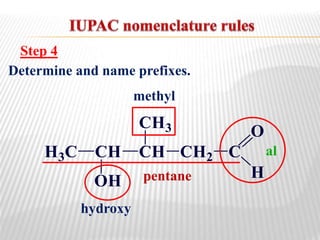
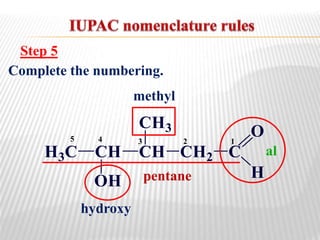
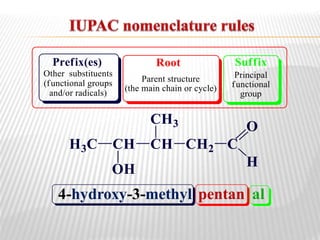
Bioorganic chemistry studies the relationship between the structures of organic compounds and their biological functions. It examines natural biologically important compounds like biopolymers, vitamins, hormones, antibiotics, and pheromones, as well as synthetic regulators of biological processes like drugs and pesticides. The structure and presence of functional groups in a molecule determine a compound's chemical properties. Nomenclature describes the complete structure of organic molecules using various naming systems, including trivial, radicofunctional, and IUPAC substitutive nomenclature.