- 1 / 31

- 2 / 31

- 3 / 31
 Most read
 - 4 / 31
 Most read
 - 5 / 31
 Most read
 - 6 / 31

- 7 / 31

- 8 / 31

- 9 / 31

- 10 / 31

- 11 / 31

- 12 / 31

- 13 / 31

- 14 / 31

- 15 / 31

- 16 / 31

- 17 / 31
- 18 / 31

- 19 / 31

- 20 / 31


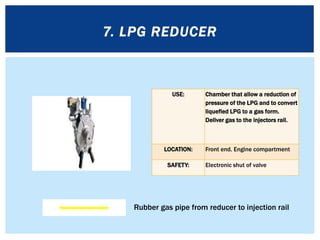

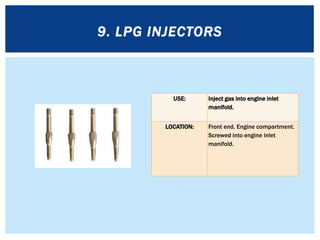


This document provides an overview of liquefied petroleum gas (LPG) as an alternative fuel for transportation. It defines LPG, compares it to compressed natural gas, and discusses its production, properties, advantages, applications, and performance/emissions when used in vehicles. LPG is produced as a byproduct of oil refining or natural gas processing. It consists mainly of propane and butane and is stored and transported as a liquid under pressure. When used as a vehicle fuel, it is less polluting than gasoline but requires installation of an LPG conversion kit involving a fuel storage tank, pressure regulator, and injectors.


