Downloaded 18 times


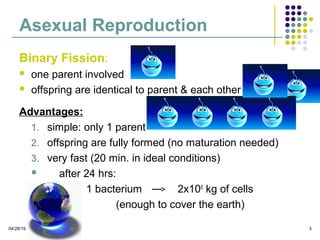
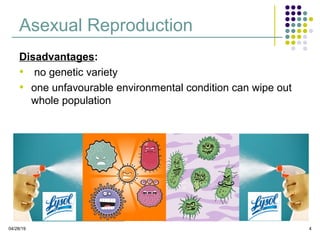
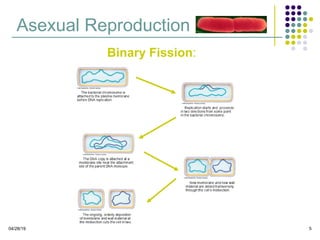




Bacteria can reproduce through either asexual or sexual reproduction. Asexual reproduction, known as binary fission, involves a single parent splitting into two identical offspring very quickly, around 20 minutes under ideal conditions. This allows for rapid population growth but lacks genetic diversity. Sexual reproduction involves two bacterial parents exchanging genetic material, resulting in offspring that are genetically different from the parents and each other. This provides genetic variety and potential antibiotic resistance, but is more complex and does not increase population size.


