This milestone brings us closer than ever to Apple 2030: Our ambition to become carbon‑neutral across our global footprint by using more recycled materials, renewable electricity, and lower‑carbon transportation.
We’ve committed to reducing our emissions by 75% compared with our 2015 baseline, with the remaining 25% being addressed through high‑quality carbon removal projects that protect and restore natural ecosystems.
A detailed approach. From design to disassembly.
Design our products with recycled and renewable materials.1
Our Approach
Recycled and renewable materials often have a lower carbon footprint than mined materials. By sourcing more recycled and renewable content, we aim to one day end our reliance on mining.
Our Progress
24% of the materials we shipped in Apple products came from recycled or renewable sources.2
Source all manufacturing electricity from renewable energy.
Our Approach
Most of our carbon footprint comes from the electricity used to manufacture our products. So our suppliers are transitioning to electricity generated from solar, wind, and other renewable sources.
Our Progress
Our suppliers sourced nearly 18 gigawatts of renewable energy in 2024, avoiding nearly 22 million metric tons of greenhouse gas emissions.
Package and ship our products with lower emissions.
Our Approach
We prioritize shipping products using lower‑carbon modes of transportation like ocean, rail, and ground. And we’re working to remove plastic from Apple packaging.
Our Progress
All new Apple products come in paper packaging that’s 100% fiber based. Depending on where you live, the entire box may be placed in your household recycling bin.
Match 100% of our customers’ energy use with clean electricity.3
Our Approach
We plan to match 100% of the expected customer electricity use for Apple products with clean electricity.
Our Progress
We’re investing in clean electricity projects around the world.
Maximize the materials we recover from recycled products.
Our Approach
We’ve developed technologies, such as our disassembly robot Daisy, to recover critical materials so they can be recycled.
Our Progress
In 2024, we expanded the capabilities of Daisy, which can now disassemble 36 models of iPhone into discrete components.
Your devices have more to give.
Protect the Earth’s precious resources by recycling the Apple devices and accessories you no longer use.
21.8M metric tons of CO₂e emissions avoided through our Supplier Clean Energy Program in 2024.
24% of materials shipped in our products came from recycled or renewable sources in 2024.2
99% recycled cobalt in all Apple‑designed batteries.4
3.6M metric tons of supplier facility waste diverted from landfills through our Zero Waste Program.
150,000 acres of sustainably certified forests restored, and 100,000 acres of native ecosystems protected through the Restore Fund.
14 billion gallons of freshwater savings through our Supplier Clean Water Program in 2024.
The proof is in our products.
We design products with the environment in mind. That includes making them durable and energy efficient, and using smarter chemistry to ensure that they’re safe for everyone who assembles, uses, and recycles them.
To reach our goal of making products with only recycled or renewable content, we’ve prioritized 15 materials — including titanium, cobalt, and gold — based on their environmental and social impacts. These 15 materials account for over 87% of the total mass of the products we ship.
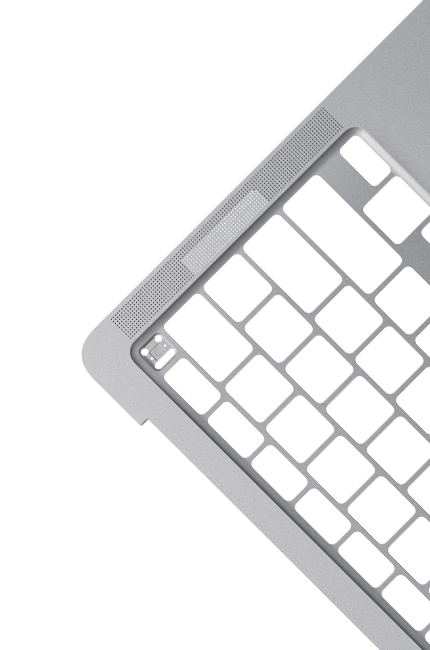
iPhone Air is made with 35% recycled content,5 including:
80% recycled titanium in the device.
100% recycled cobalt in the battery.
100% recycled gold plating and tin solder in all Apple-designed printed circuit boards.
Package and Ship
Good things come in small, 100% fiber‑based packages.
The titanium cases of Apple Watch Series 11 and Apple Watch Ultra 3 are manufactured with an innovative new 3D printing process that uses 100% recycled titanium and requires 50% less raw material than before.7
Doing right by the planet means doing right by the people who live on it — especially those most impacted by environmental risks. So we’re supporting partners and communities worldwide. Because we can achieve more together than we can alone.
Carbon removal. It’s in our nature.
Carbon removal. It’s in our nature.
As we continue to reduce our footprint, we’re also investing in high-quality, nature-based carbon removal projects to balance the emissions we can’t yet avoid.
Partnering with Goldman Sachs and Conservation International, we created a first-of-its-kind initiative called the Restore Fund. It aims to remove carbon emissions from the atmosphere by investing in projects that restore forests, wetlands, and grasslands — while offering a financial return.
The Restore Fund has invested in three high-quality forestry managers. Our first project is in Paraguay through an investment in Arbaro Advisors. We’re supporting their efforts to develop sustainably certified working forests while creating opportunities for local communities. We’re also partnering with Symbiosis to help them grow native hardwood trees and restore biodiversity in Brazil’s Atlantic Forest. And with BTG Pactual Timberland Investment Group, we’re supporting their efforts to restore forests and protect natural ecosystems in Brazil.
In 2023, we announced an expansion of the Restore Fund with up to an additional $200 million committed to Climate Asset Management — a joint venture between HSBC and Pollination. And in 2024, we added another $80 million commitment from key manufacturing partners Taiwan Semiconductor Manufacturing Company and Murata Manufacturing.
UP NEXT
Conserving water like the Earth depends on it.
Conserving water like the Earth depends on it.
Water is among the planet’s most precious resources. So to protect it, we’re going beyond our corporate footprint, across our supply chain, and into the communities and watersheds where we operate.
Our supply chain accounts for 99 percent of our total water footprint. Through our Supplier Clean Water Program, we help train our suppliers to better reuse and recycle water. Thanks to this partnership, our participating suppliers are now reusing and recycling water in their factories at an average rate of 42 percent, which reduces the amount of freshwater we withdraw by billions of liters every year.
UP NEXT
More renewable electricity. More readily available.
More renewable electricity. More readily available.
We’re actively working to democratize access to renewable electricity around the globe. Because clean energy benefits all of us, our communities, and the environment.
Our Power for Impact initiative gives local communities and organizations access to cost-effective energy while supporting their economic growth and championing social impact. We support projects in countries around the world, including South Africa, the Democratic Republic of the Congo, and the Philippines, to help provide clean energy to the communities that need it most.
UP NEXT
Help make Mother Nature proud.
There are many small actions you can take to make a big difference for the planet.
We aim to make durable, long-lasting products and enhance material recovery. And we’re committed to stewarding water resources and working to eliminate waste sent to landfills.
Apple has a rigorous program to ensure the safety of chemicals used in our products. Learn about Apple’s strict standards, detailed toxicological assessments, and methodology for assessing chemicals of concern.
We hold ourselves and our suppliers to the highest standards of labor and human rights, health and safety in the workplace, environmental practices, and the responsible sourcing of materials.