Agentic payments: The next frontier of digital transactions
Charting the future of payments
Runtime
Complete form to watch full video
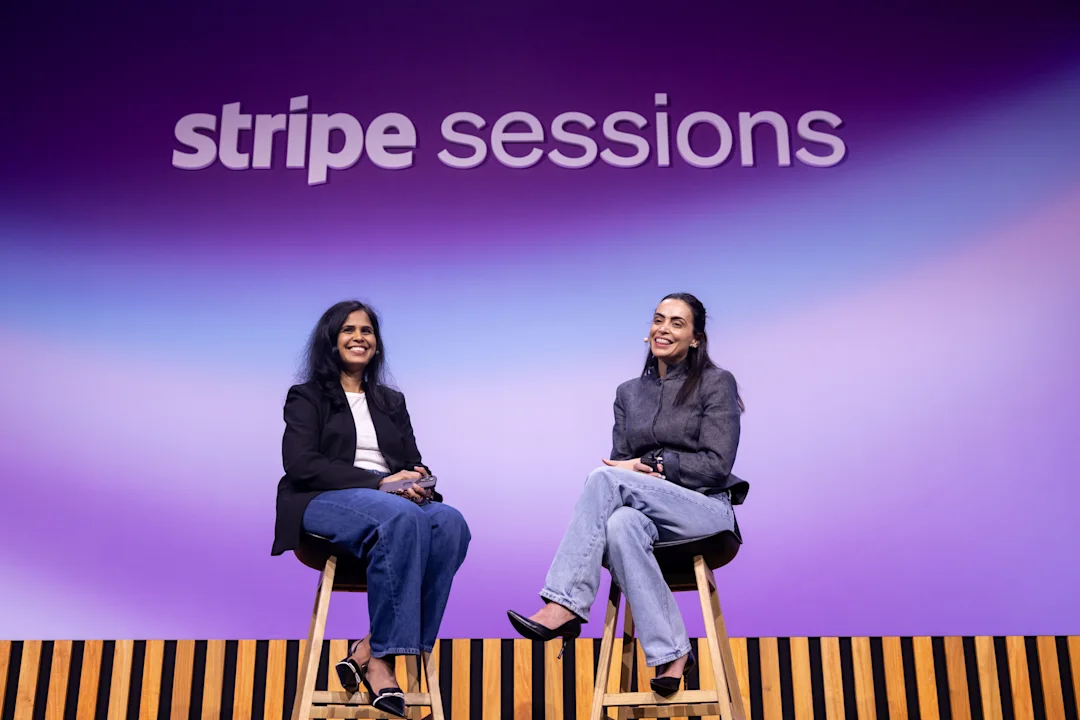
Join Soha Hohnecker, global head of sales and marketing at Amazon Agentic Payments, and Kalyani Koppisetti, Principal Partner Solution Architect at AWS, for a look at how agentic commerce is reshaping payments. As agents begin purchasing on behalf of consumers, the infrastructure around them needs to catch up—from new authorization models and agent authentication to merchant APIs and fraud detection. This session covers what needs to change and what merchants and payments leaders should be building toward now.
Speakers
Soha Hohnecker, Chief Marketing Officer and Global Head of B2B Growth, Amazon Agentic Payments
Kalyani Koppisetti, Principal Partner Solution Architect, AWS
KALYANI KOPPISETTI: How is everybody doing? I’m Kalyani Koppisetti. I’m a partner solutions architect at AWS. I have been in the financial services industry for 25-plus years. In the last couple of years, I’ve been focused on payments and recently agentic commerce. Has anybody heard the term “agentic commerce”? Okay, good. I’m glad. Before we get started, so how can you introduce yourself, tell me what you do, and everything that we need to know about you?
SOHA HOHNECKER: Yeah. Hello, everyone. I’m Soha. I’m a global leader for Amazon Agentic Payments. I’ve been nine years now working for Amazon. My team basically sits at the intersection of the agentic experiences we’re building on Amazon and the infrastructure that makes them work. One of the examples we have now live is Shop Direct. It’s a feature we recently launched in beta in the US within the Amazon Shopping app. It’s an AI-powered experience on Amazon and in the app, which enables customers to discover and purchase products from stores across the web.
KALYANI KOPPISETTI: Awesome. So let’s actually go to the beginning. And at what moment it was a signal that the agentic commerce is not a hype and actually it is a way people would stop. How did this journey begin for you?
SOHA HOHNECKER: Yeah, so I think the shift started to become real. It wasn’t because of a specific product launch. I think it was through a change in the conversations we were having with the merchants. They stopped asking, “So what is agentic? What is this?” And starting asking, “So how do we get ready to it? This is meaningful.” Signal, it means the question moved from curiosity to speed. From the payment perspective, the payment’s tell was when merchants stopped asking about conversion rate in agentic flows and started asking more about authorization models. So who authorizes a transaction when a customer is not in the checkout screen? This is genuinely a new question, and one the industry does not really have a clean answer if I’m being totally candid. At Amazon, we are building agentic experiences for customers, and we are building the payment infrastructures.
KALYANI KOPPISETTI: Awesome. At Amazon, at AWS, I should say. At AWS, we have every tool that you need to build an agent, run an agent, and scale an agent. And I’ve been talking to some customers and partners, and I’m hearing different definitions of agentic commerce. So at Amazon, how do you define agentic commerce?
SOHA HOHNECKER: Yeah, that’s an interesting question. It’s actually something we’ve debated. For us, agentic commerce means an AI agent acting on customers’ behalf to complete a shopping task. The task could be understanding their intent, discovering the right product, completing the purchase with varying degrees of autonomy, depending on how much the customer wants to delegate. The key word here is “act.” And one of the analogy that for me that speaks a lot is basically if you compare, let’s say a GPS to a self-driving car, the GPS is informing you. However, the self-driving car is taking you from place A to place B. Agentic commerce is the self-driving car moment for shopping. And this really changes a lot how we think about the whole shopping experience. On the maturity curve, I believe, if you ask me this three, four months ago, I would tell you we’re still in experimentation. I think now we’re past experimentation, but that also speaks a lot about the speed at how things are moving.
But, however, we are not yet at mass adoption. As I mentioned before, we have at Amazon some live experiences that customers are actively using.
KALYANI KOPPISETTI: Yeah.
SOHA HOHNECKER: A concrete example, and you have it here is what I mentioned earlier, Shop Direct. It’s currently in beta. It enables brands to surface their products directly within the Amazon shopping experience. When customers search for a product or brand, they can discover relevant items, and they are then redirected to the brand’s own website to complete the purchase. This is very important for us because this allows merchant to reach Amazon customer base while maintaining full cover control over pricing, fulfillment, and customer service. It is powered by direct product feed from merchants, so that we ensure accurate, up-to-date product information and a seamless discovery to purchase journey. This is a clear journey, example, of how customer experiences are already evolving beyond traditional marketplaces that were more distributed yet still connected models.
KALYANI KOPPISETTI: Awesome. I love the analogy of self-driving cars versus GPS. We’ve all been there. We are all comfortable with Waymos or self-driving cars that get us from one place to another. So I’m sure we’re going to see the same thing in agentic commerce as well. But one of the things, we talked about the merchant side of product field thing. I think for a consumer to go from GPS to self-driving car, there needs to be a consumer confidence and authentication. I feel like agentic commerce is a place where that needs to be explored a little bit more. So, what does it take to capture what consumer wants? How does merchant know if the agent is acting on behalf of the customer, and how does the merchant fulfill that transaction?
SOHA HOHNECKER: Yeah. So this is one of the challenges we have in solving basically for agentic commerce. From a payments perspective, capturing consumer needs is all about how customer authorize agents with specific spending parameters. So this is fundamentally different from traditional payment authorization and how we think of authorization and payment. So let me give you an example. If a customer tells an agent, “Oh, go buy me running shoes under $150.” Or they tell them, “Can you optimize my weekly grocery spend?” From a authorization perspective, these are two different scopes. The first one is bounded and with specific parameters while the second one requires ongoing authority and judgment calls from the agent. So you need to be really trusting the agent to make these judgment calls on your behalf. We’re not there, I think. I think, what is working?
KALYANI KOPPISETTI: I would love for the agent to optimize spending of a lot of things that we go and shop.
SOHA HOHNECKER: Yeah. And I think it’s coming. At the moment though, what’s working is more the bounded authorization models. Customer can set spending limits, they can define the product categories they are interested in, approval thresholds, similar to basically when you have a corporate card with rules, but you can have it very granular rules. So that’s really working. I think today, one of the biggest challenges in agentic commerce is when you have cross-merchant agent shopping. Basically, if an agent wants to compare—which is the use case I think we all would love to have—wants to compare prices and purchase across multiple retailers, today, the customer has to authorize the agent separately with each merchant. There is no common framework yet to make this seamless.
KALYANI KOPPISETTI: Awesome. We talked about consumers. Let’s talk about merchants. This morning, I had a session on agent-to-agent, preparing for agentic commerce or agent-to-agent transactions. One of the things that we said is most merchants are not even aware of consumers coming as agents. They block it on robots.txt, they don’t have manifestation, they’re still preparing themselves. But all of those are on the technical side of it, but how do they prepare for product? What do you think merchants should be doing from a product catalog perspective, from a data perspective, and what should they be thinking about?
SOHA HOHNECKER: Yeah. And so we’ve been having a lot of discussion in the past few days with merchants. And I think one, in my point of view, one of the biggest opportunities in agentic commerce is personalization. This is what really makes it really adding value to the buyer experience, and how agents can act on individual customer behavior versus any customer behavior. The merchants, when we talk to them today, at least their perception is, that they have to face a choice. Do they optimize for agent discoverability, or do they continue with human-centric merchandising, what they have been doing for years? Because current systems make it hard to do both at the same time. So you need to make a choice. What is working is merchants who expose structured product data, pricing, inventory, specification, shippings, via APIs. Agents can query this data programmatically without screen scraping and make smarter recommendations.
The challenge is that most systems were not built in this way. So this data is really scattered. It’s at different places. It’s not necessarily data that can be exposed tomorrow through an API. However, agents need real-time inventory, dynamic pricing, frictionless payments. And also they don’t like CVV prompts, 3D Secure pop-ups, all of that interrupts the flow. And so there’s really rethinking of how is it? So if I’m being candid, most merchants today, they tell us we’re not there. It’s hard because, how do I optimize for agents? So do I remove my CVV, which I still need? So it’s not easy, but they are starting and they are starting to build the first layer, which is agent-first interfaces, structured data, APIs, programmatic payment acceptance. This will help them in the agentic commerce.
The tension is real though, because investing now takes effort. ROI is not clear. Agent-driven volume is small. It’s growing immensely. We’re seeing this also on Amazon. There’s a lot of growth from the agent-driven volume. However, relative to other channels, it’s still very small. So some merchants are taking a wait and see approach. Some of them are starting by structuring their data.
KALYANI KOPPISETTI: Awesome. So we’ve talked about consumer needs, merchant readiness. Let’s get into nuts and bolts of things. How do we ensure agent-driven transactions are actually work end to end? We have some recommendations that we give to our merchants, but I would love to hear from your perspective, what do you think we should be thinking from authentication to payment? Are there any frictions? Are there any…
SOHA HOHNECKER: A few.
KALYANI KOPPISETTI: Is it ready? Is it a matter of investing, or are there technologies that are still lacking, or is… What do you think?
SOHA HOHNECKER: So if we break down the purchasing journey today, and what’s happening, and where we see… By the way, it’s an opportunity for us to review all of this. The first thing is our traditional fraud models. They will go and probably flag agent transactions as suspicious. Why? Because agents really behave very differently from humans, and these fraud models have been trained for years on human behavior. So for example, agents will click very, very quickly. They have a very high velocity. Usually the fraud models, if there’s a lot of clicking, or clicking in a very short period of time, they will say, “Okay, this is fraudulent.” They also can act at odd hours, 3:00 am in the morning making a purchase because your sneakers now is at $100. And so they do not follow human patterns. And I think this is the first challenge is like, how do we retrain these fraud models?
The second one is authentication protocols. We just talked about it. Today, for me to know that Kalyani, it’s you, usually I will send you an SMS one-time password, biometrics, CAPTCHA, all of that. And these things will block an agent.
And then the third one is settlement and reconciliation. I think this is also very important. Our current models, they assume human-readable receipts, you receive the PDF in your email, you read it very well, agent doesn’t know how to read it. It needs to be data that they can parse. And so, executing an agent transaction requires agent authentication protocols that verify both the payment method and the agent authority. So instead of saying, “Okay, is your card valid?” Now we need to do, “Is your card valid? And is the agent authorized to do this?” So add another step to the authorization. The fraud models need to distinguish between authorized merchant agents and compromised ones. And again, this is through training LLM models—which AWS knows a lot about—and then real-time authorization, because also one of the things that agent is very important, they cannot wait for batch approvals. Things need to happen right away.
KALYANI KOPPISETTI: Yeah. I can imagine if I was seeing shoes that I want to purchase, I probably would do one more time research before I buy it, but if I told an agent to buy it, it would probably buy it immediately.
SOHA HOHNECKER: Yeah, exactly.
KALYANI KOPPISETTI: It won’t even wait. And I think I’m assuming with agents, we also have to think about disputes and chargebacks and all of those things as well.
SOHA HOHNECKER: Yeah. And today, there are no standards for that either. It’s by the way, an industry-wide challenge. I think this is the nice thing about this is that actually it’s not one player. I think it’s all of us that need to work together to solve it. There’s a lot of layers to the agentic stack. You have identity, authentication, payments, real-time settlement, dispute resolution. All of this needs to be developed in an integrated whole, but again, through everyone—industry and regulators working together.
KALYANI KOPPISETTI: Yeah. And I’m assuming cross-border becomes another aspect that we focus on as well.
SOHA HOHNECKER: Yes, exactly.
KALYANI KOPPISETTI: Awesome. So we broke down a lot of areas where still work needs to be done, but this reinforces something that I hear from our partners and our customers as well, that the infrastructure decisions that we are doing right now, the things that we are doing in terms of how you’re modernizing your architecture or infrastructure, these are going to drive what’s going to come after for the next 10 years or next 15 years. So we are at that pivotal moment, and I think we kind of move towards actual action rather than just wait and see. Exactly. So let’s close on what that means practically. And can you share some tips for the audience?
SOHA HOHNECKER: Yeah. So here you go. All right. So in my opinion, there are three main things that merchants need to invest on if they want to really start working on agentic commerce. The first one, which we talked about, is focus on foundation and infrastructure. So do not get ahead of yourself with very sophisticated use cases. For merchants really, that means exposing structured data, via APIs. Start with basic product information, pricing, inventory, and that agents can query programmatically. This will help you a lot in getting the right information in front of the customers when the agent is trying to get this information. So this is very important. The second one is, start with simple, test-friendly, agent-friendly payment flows. Don’t start with very complicated. Remove friction points.
KALYANI KOPPISETTI: So you don’t advise merchants to open up $10,000 purchases for agents yet?
SOHA HOHNECKER: Not right away.
KALYANI KOPPISETTI: Okay.
SOHA HOHNECKER: It will come. I really believe it’s coming.
KALYANI KOPPISETTI: Yeah.
SOHA HOHNECKER: It’s just, we don’t have, today, the infrastructure that is there. So, remove friction points like CAPTCHA, multifactor authentication, all of these. All of these block agent transaction. Start simple and iterate, see how it goes.
And then the third one is, begin with contained use cases. Think like subscription optimization. This is easy. Reorder automation, basket building. Do not try to solve right away cross-merchant agent shopping on day one. Start small, learn fast, expand as you gain confidence.
KALYANI KOPPISETTI: Awesome. I think in the earlier session, we were talking about use cases across all industry verticals, including retail. And I think where we are seeing a lot of traction is with the SaaS API monetization customers, but you’re absolutely right. Retail is also right there. There are some use cases that will be amazing to have an agent take care of end to end. Is there anything else you would like to add or…
SOHA HOHNECKER: So for me, agentic commerce is here. It’s not something like that is a future use case, et cetera. I think the websites or the merchants or the ecommerce that will win in the future are those who are really starting today. What I keep coming back to is that merchants and payment providers who win are the ones who treat trust as a product. This is super important. You just said that, you asked me, “So how does a buyer will trust like a self-driving car?” It’s the same. We need to build this trust. It’s not a feature. It’s a product. The technology is moving very fast. The standards will catch up, but the trust infrastructure, the customer relationships, the networks that you have, those take years to build and cannot be replicated quickly. So if you have them, lean into them. If you are building them, start now.
KALYANI KOPPISETTI: Awesome. So we have quite a few audience here. So let me ask the audience this question. How many of you are working for a company or know of a company which is ready for agentic transactions? You can raise your hands, you can clap, you can wake up if you’re sleeping. There’s a few. I see few hands. I’m glad there is some experimentation happening in this space. Have you used AI agents?
SOHA HOHNECKER: So I did use our own, the one that we have live, the Amazon one that is live on Amazon. I think the experience is very smooth. Again, there’s a bit, like I think like everyone of like, is it going to be exactly what I thought I was ordering? It was, by the way, so that was the good news. But it’s like the trust layer, again, what we talked about is so important, so foundational. And I think these first experiences for customer will determine as well whether they will trust this new world that we are describing, or whether they will be suspicious of it.
KALYANI KOPPISETTI: No, it’s important. The merchants can provide the 1P agents on their protocol, like Rufus is amazing, by the way. I use it every day, but we are also seeing, we have technology where consumers can pretty much automate everything that they want, right? So you get lot of these agents that are coming through the doors, which you may or may not recognize because these are the agents that the consumers are developing using open source software that is available. It’s pretty easy for anybody to get hands on, and everybody’s trying out automating their own workflows. And I can see some use cases where I would rather have an agent do end to end than me actually spending that time or doing the context switching thing. So in my opinion, I don’t think “agentic commerce is coming” is a good statement anymore. I think it’s already here. What have you been, from the perspective of where you are, what are you seeing with companies?
SOHA HOHNECKER: So on Amazon, we’re seeing a lot of uptake. Rufus, there were some numbers that were shared yesterday, like there is a hundred and something percent year on year, more usage of Rufus. So the experiences we have on Amazon are really taking off. And again, the merchant conversation we’re having is not like, should I do this? It’s like, when should I do this? And I think this is really a big change from where we were maybe really just four or five months ago. Things evolved. I think also our mental model around agentic commerce has evolved, and I think that is also creating some trust in the industry.
KALYANI KOPPISETTI: Okay. Yeah, no, that makes sense. I have one last question from an agentic commerce, we’ve talked about a lot of things. So when you ask the merchants to go slow and get the product ready, do you see that all the merchants are ready with most of these things, or is it just a matter of return on investment use case, or is it that they don’t even have the tools and they don’t even know where to begin? Is that more of a true statement than return on investment?
SOHA HOHNECKER: Yeah, It’s a very good question. I think it really depends. So you have some merchants who have already started. I was talking to a merchant already two months ago, and they had already started by structuring their data, API. They actually noticed that when customers were querying on ChatGPT, they were never coming up. And they looked into it, and it’s because they were blocking the—
KALYANI KOPPISETTI: That’s what I was talking about.
SOHA HOHNECKER: —the agent. And so they opened that, and they understood as well that for the agent to be able to really query them in a very precise way, they need to expose their catalog API. So they exposed the catalog API. So you have these merchants, even those ones though, for them, this is a pilot. So they treat this as “We’re testing, we’re seeing what works, what doesn’t work.” And then on the other side of the spectrum, you have the merchants, and rightly so, who are wondering, “So what does it mean for my brand?”
If I have agents coming and like buying, and the buyer might never be on my website. And so this is why for us, the Shop Direct experience is actually a good one because it’s a mix of an agent driving the discovery, but then you go on the merchant website and the merchant keeps all of the branding, et cetera, on their website. But this tension is real as well for merchants. So what happens with everything that I’ve invested on?
KALYANI KOPPISETTI: Yeah. We hear that from the merchants that I work with as well. They want to enable agentic commerce, but they want to also keep the consumer relationships to… They don’t want to lose the consumer relationship, and it is their relationships that they want to protect as well. And also more importantly, they want to preserve that their brand, how they present their brand to their consumers. They know their customers well. So I can see that being the case with this. So I think, is there any other last questions from you or from the audience?
SOHA HOHNECKER: Thank you, Kalyani. Thank you. Thank you, everyone.